
The phrase “couples vibrator” sounds as though a device comes with a relationship upgrade already installed. Anyone who has ever tried to agree on dinner knows better. Shared pleasure is shaped less by a gadget than by the conversations around it: what each person likes, what feels awkward, who gets to choose and when everyone would rather stop and laugh. The best part of the history is how those conversations have slowly become easier to have aloud.
From private subject to shared vocabulary
For much of the twentieth century, public talk about sex often treated pleasure as either a punchline or a private problem. Sexual-wellness products were sold for individuals, while couples were expected to understand each other without much explanation. That expectation can be romantic in a film and spectacularly unhelpful in a real bedroom. Later sexual-health education and a more visible pleasure market offered people words for preferences they might previously have struggled to name.
The change is not a claim that everyone now communicates brilliantly. It is an opportunity to treat curiosity as normal. Asking “Would you like to try this?” is a better opening than revealing a surprise gadget at the least convenient moment. A partner’s hesitation is information, not an objection to overcome. A shared experience works only if it is genuinely shared.
Relationship research gives that common-sense point some depth. A meta-analysis of couples’ sexual communication found associations between sexual communication and relationship and sexual satisfaction. An earlier study of 142 couples also reported links between greater sexual communication and more positive outcomes. These studies do not prove that one perfect conversation guarantees a better relationship. They do suggest that saying what you want matters more than hoping a partner will mind-read with theatrical accuracy.
Products began to acknowledge the second person
One visible commercial shift came with products explicitly designed for couples. We-Vibe’s company history dates its original couples vibrator to 2008 and describes its founder’s question about a design that could sit between partners. Later models added remote and app features. The milestone is useful because it shows a design brief changing: instead of assuming one user and one hand, manufacturers considered two people, different positions and shared control.
That shift did not create a universal “couples” shape. Some people prefer an external device used together. Others like a wearable that one person controls and the other wears. Some want a product involved during sex; others prefer to keep devices and intercourse separate. The label on the box does not tell a couple which arrangement will be comfortable. It certainly does not prove that a particular wearable is suitable during intercourse. The people using it get to make their own definition of shared pleasure.
Distance changes the ritual, not the need to ask
For partners in different cities, phones and connected devices add another way to be playful together. Research on long-distance relationships has found that responsive texting was associated with greater relationship satisfaction among long-distance participants in one study. A separate study of connected touch bracelets found increased feelings of connection over a short trial, without eliminating the longing for actual touch. Neither study is a verdict on connected sex toys. Both remind us that the meaning of a signal depends on the relationship around it.
It can be helpful to agree on an invitation, a time window and an easy way to stop before sharing control. A message that says “now?” can be sweeter than an unexpected buzz. Consent is an ongoing exchange, especially when someone can send a signal from another place. The right to change one’s mind travels just as far as the app connection.
Leave room for the ridiculous
Shared intimacy often comes with odd angles, unfamiliar buttons and the possibility that one person finds a sound hilarious. Humour is not evidence that the moment has failed. It can be evidence that both people feel comfortable enough to be themselves. There is no requirement to perform sophistication while learning something new together.
Exploring today’s options
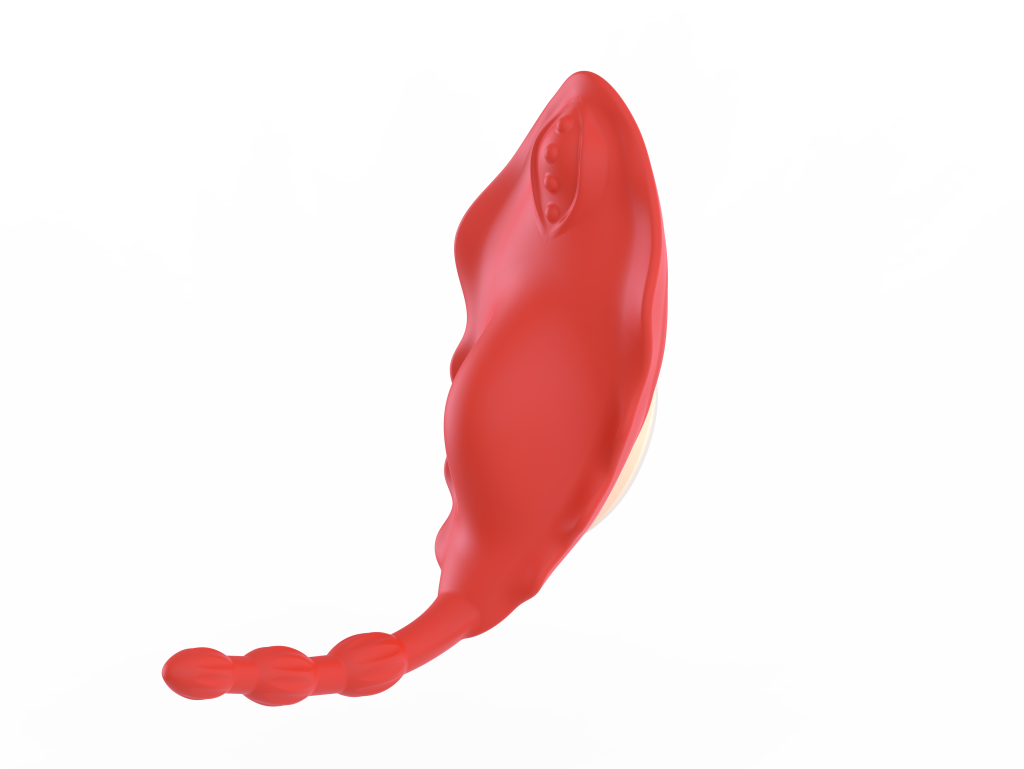
The couples vibrator collection shows different ways to share control. The Wearable Panty Vibrator with App & Magnetic Clip offers an external wearable approach, while the App-Controlled Wearable Vibrator with Long Tail offers a different shape and documented long-distance control. Choose by comfort and the kind of interaction both people want. Follow each exact product’s use instructions; do not assume a wearable is appropriate for intercourse from its name or photograph.
The shared part is the point
It is easy to mistake “shared” for “simultaneous.” Some couples enjoy the same moment together; others enjoy taking turns, talking afterward or simply giving each other permission to be curious. A product can be part of a relationship without becoming its centrepiece. The idea that every new experience must be a performance puts pressure on the very thing people hoped would feel playful.
This is where the cultural change becomes personal. Older scripts often assigned one partner the role of expert and the other the role of audience. A more generous approach lets both people be beginners. They can say what they know, admit what they do not and decide together whether an experiment is worth repeating. A failed attempt to find a comfortable angle can become a useful piece of information, or a funny story that belongs only to them. Neither outcome needs a review score.
Comfort also includes timing and context. A person may be interested in an idea in the abstract and not interested tonight. Someone may enjoy a device alone and prefer a different kind of closeness with a partner. Those preferences are not contradictions to be fixed. They are boundaries to be heard. The most durable invitation leaves room for a yes, a no and a “maybe another day.”
The most durable couples technology may be a question asked without pressure and an answer heard without defensiveness. Devices can add novelty, distance can inspire creativity and laughter can rescue a clumsy moment. None of those requires a perfect script. Shared pleasure is a conversation that two people are allowed to keep revising.