The pelvic floor has acquired the public profile of a gym membership. We are told to “work it,” buy equipment for it and count repetitions. Yet the muscles themselves are more interesting than a fitness slogan. They support pelvic organs, help with bladder and bowel control and participate in sexual function. They also need to relax. That last point tends to get lost when every discussion turns into a challenge to squeeze harder.

The doctor behind the familiar name
Arnold Kegel did not discover that the pelvis contained muscles. His contribution was to make systematic pelvic-floor exercise a documented clinical practice. In 1948 he published “Progressive resistance exercise in the functional restoration of the perineal muscles”. Another 1948 paper described the perineometer, a device for measuring muscle activity and helping patients identify a contraction. In other words, the idea of feedback was present near the beginning, long before an app put a cheerful graph on a phone screen.
The original work arose from clinical concerns such as urinary leakage and postpartum changes. Over subsequent decades, pelvic-floor muscle training became part of physiotherapy and continence care. It also entered the popular imagination as a shortcut to better sex. Those conversations are related, but a medical intervention and a promise of instant transformation are not the same thing.
There is a much older history of bodily awareness and exercise, but the evidence does not support attributing a modern Kegel routine to a single ancient culture. It is more honest to say that Kegel developed a specific clinical method in the twentieth century than to attach a seductive but unverified ancient origin story. The archive has plenty to offer without borrowing a myth.
The muscle group that must also let go
Think of the pelvic floor less as a single button and more as a hammock of muscles with several jobs. A useful contraction lifts and then releases. The Cambridge University Hospitals guidance explicitly says that relaxing after each contraction matters. The Royal United Hospitals Bath guidance explains that an overactive or tense pelvic floor can make effective contraction difficult and may be associated with pain or bladder and bowel symptoms.
That complicates the familiar “stronger is always better” story. Someone with leakage may benefit from a tailored strengthening programme. Someone with pain, difficulty relaxing or a tense pelvic floor may need a different approach. Even when exercise is appropriate, fatigue is possible. If symptoms persist or exercises cause discomfort, a pelvic-health physiotherapist can assess what is happening. A device cannot diagnose whether the right task is contraction, relaxation or something else.
The gadget arrives, again
Once you know about Kegel’s perineometer, modern connected trainers look less like a sudden invention and more like a new chapter in a long interest in feedback. Today’s devices can offer reminders, guided sessions and visual progress displays. Some use vibration or changing weights to provide a sensation to work around. The point is not that an app knows more about your body than you do. It is that a prompt can make an otherwise invisible muscle group easier to notice or a routine easier to remember.
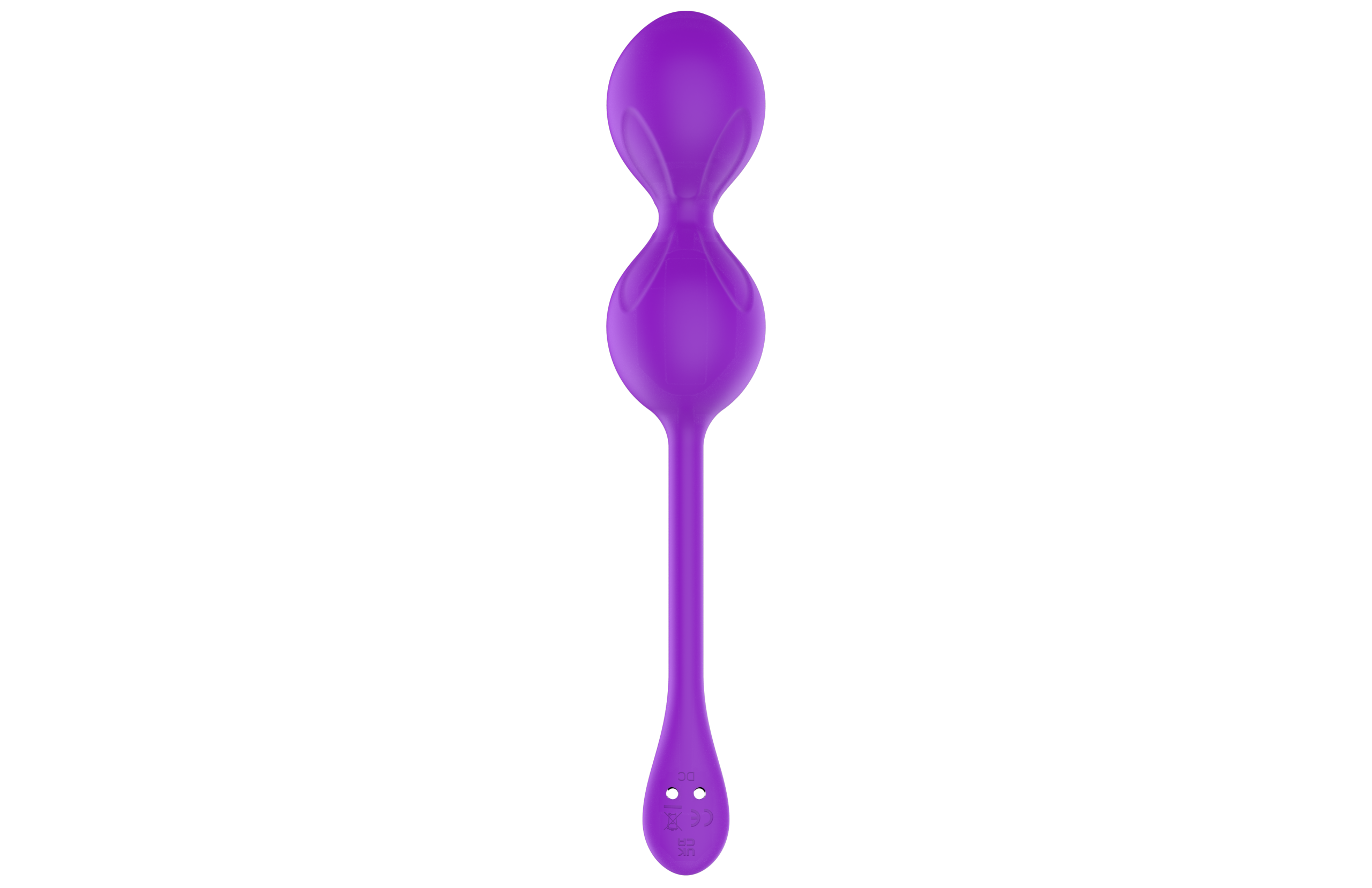
The market also uses the label “Kegel balls” for products with very different designs. Their presence does not itself create a clinical exercise programme, and an insertable product is not necessary for everyone. The plain, no-cost exercise remains an option when appropriately recommended. For symptoms such as incontinence, pelvic pain or pain with penetration, professional advice is more valuable than a device promising universal results.
Exploring today’s options
The Kegel collection shows current consumer designs, including App-Controlled Vibrating Kegel Balls and a 4-Piece Kegel Trainer Set. They are examples of different formats, not proven substitutes for assessment or treatment. Before using an insertable device, confirm the exact model’s instructions for placement and removal; do not infer either from a photograph. The materials and care guide covers cleaning and compatibility.
A better measure of progress
Feedback technology raises a useful question: what should a progress chart actually show? A higher number can be satisfying, but pelvic-floor function involves coordination and the ability to relax. A reminder may help someone practise a clinician-recommended routine; a chart cannot tell them whether discomfort means they should keep going. The device is a tool for noticing, not a referee for the body.
There is also a quiet historical irony. Kegel’s perineometer turned an invisible contraction into something measurable, which helped patients and clinicians discuss it. Seventy years later, consumer technology still promises to make the invisible visible, now with a nicer interface. The scientific challenge has not disappeared beneath the graphics. People must still identify the right muscles, understand their symptoms and choose an appropriate plan. That is why a referral to a pelvic-health physiotherapist can be more useful than buying the most connected object in the category.
Sexual wellness deserves a place in this discussion, but it should not be reduced to a guarantee of stronger orgasms. Feeling more aware of one’s pelvic floor may matter to some people. Others are primarily concerned with leakage, pain or recovery after childbirth. Those are different goals. A good conversation with a clinician starts with the actual goal and gives relaxation the same respect as contraction.
The most useful development since 1948 may be less glamorous than a sensor. We now have a better public language for a muscle group that was easy to ignore and for the fact that function involves both effort and release. A pelvic floor is not a leaderboard. It is part of a person, and good advice begins by asking what that person needs.